
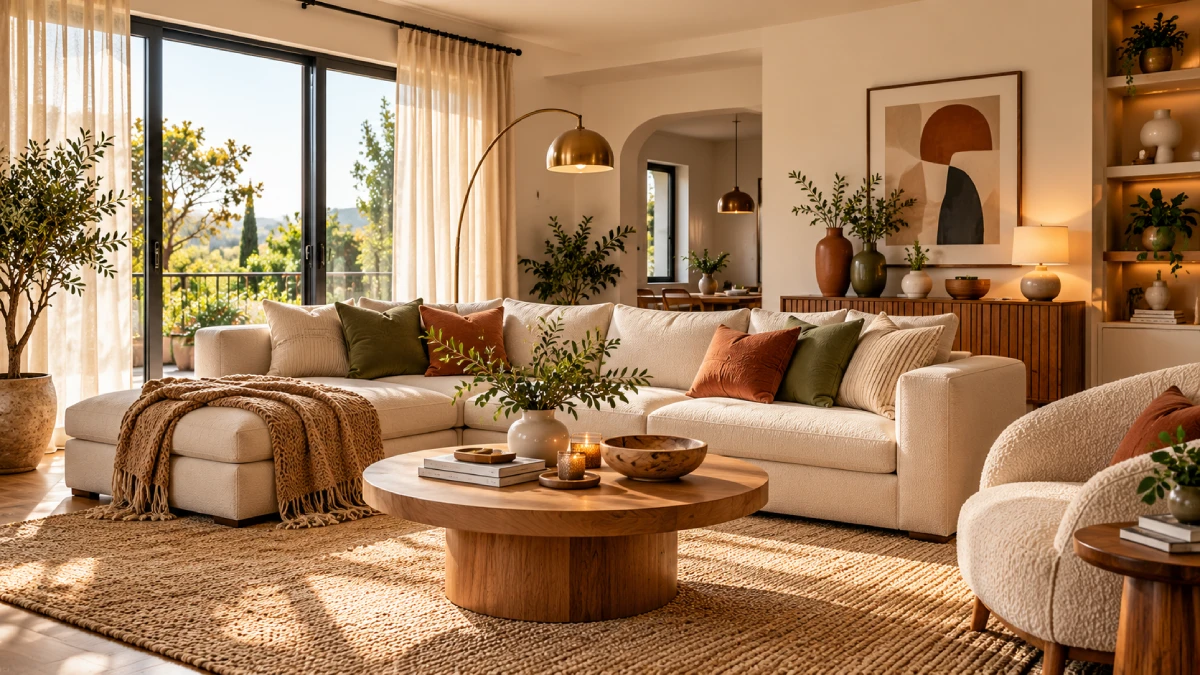
A stylish home doesn’t have to come with a renovation-sized price tag. Sometimes, the most noticeable changes happen when you improve the lighting, rearrange furniture, introduce warmer colors, or replace tired textiles.
In 2027, home design is becoming more personal, comfortable, and practical. Instead of creating rooms that look identical to online inspiration photos, the emphasis is shifting toward spaces with character, natural materials, and everyday functionality.
Houzz’s 2027 design research highlights growing interest in warm palettes, tactile finishes, curved shapes, and collected interiors. These trends offer plenty of inspiration, but you don’t need to rebuild your home to enjoy them.
Whether you’re decorating a small apartment, updating an older house, or refreshing a rental, these 17 home improvement ideas for 2027 offer practical ways to create a space that feels modern without a full renovation.
Table of Contents
Quick Facts: Home Improvement Ideas for 2027
| Quick Fact | What You Should Know |
|---|---|
| Best overall approach | Improve lighting, layout, storage, and comfort before buying more decor |
| Easiest budget upgrade | Rearrange furniture and refresh soft furnishings |
| Best living room improvement | Layered lighting and coordinated textures |
| Best bedroom improvement | Comfortable bedding and softer lighting |
| Best kitchen improvement | Updated hardware and better organization |
| Best small-home upgrade | Multifunctional furniture and vertical storage |
| Best renter-friendly changes | Freestanding lamps, textiles, and reversible accessories |
| Research-supported 2027 trends | Warm colors, tactile materials, curved forms, and personalized interiors |
| Best energy-conscious starting point | Compatible LED lighting and appropriate draft reduction |
| Most important consideration | Choose improvements that solve real problems within your budget |
The quick answer: The best home improvement ideas for 2027 combine practical upgrades with warm, personalized design. Better lighting, natural textiles, updated curtains, smarter storage, and thoughtful furniture placement can refresh a home without structural work. Start with the improvements that make daily life easier, then add decorative details.
What Home Improvement Trends Are Actually Popular in 2027?
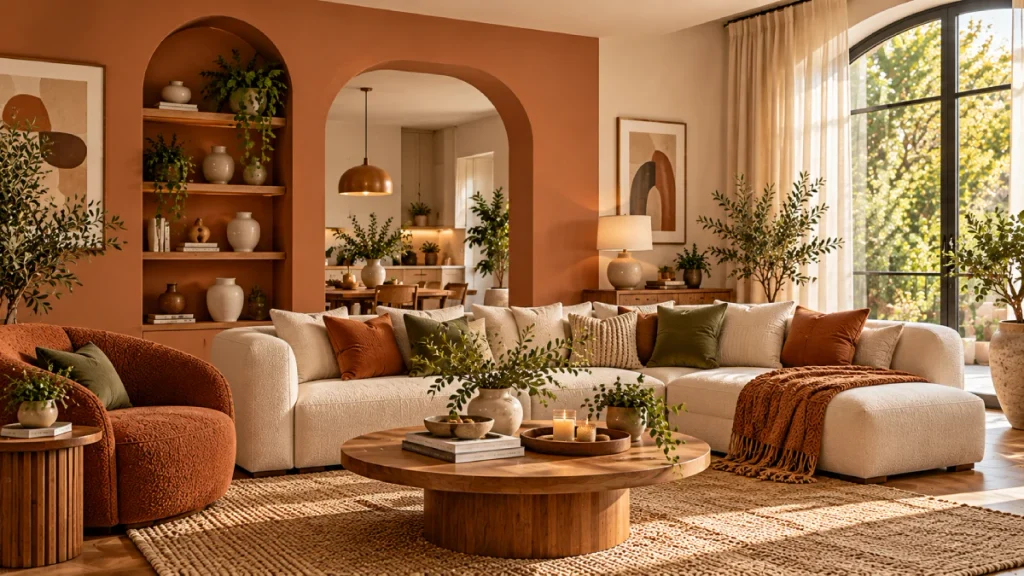
Home design in 2027 is moving toward warmer, more expressive interiors. Instead of focusing exclusively on minimalism, designers are combining tactile materials, softer shapes, traditional details, and meaningful decorative objects.
Houzz’s May 2027 Emerging Summer Trends Report found that searches for scalloped tile had more than tripled, while searches for linen wallpaper increased 104% compared with the report’s comparison period.
These findings indicate increased interest among Houzz users, not universal adoption across all households.
The report also identified growing attention to natural materials, curved forms, and sensory-rich spaces.
Houzz’s October 2027 Fall Design Trends Report further describes warm wood tones, layered interiors, and long-term livability as important design directions.
What does this mean for homeowners?
You don’t need scalloped tiles or expensive architectural changes to reflect these ideas. A curved mirror, textured cushion, warm wood accessory, or thoughtfully chosen curtain can introduce similar design qualities at a smaller scale.
The following ideas focus on making those design directions practical.
1. Refresh Your Home With Warm, Earthy Colors
Quick answer: Warm neutrals and earthy accent colors can make a home feel more welcoming. Cream, taupe, terracotta, olive green, caramel, and chocolate brown work well with wood and natural textiles.
Color is one of the easiest ways to change a room’s atmosphere.
If your living room feels cold or unfinished, you may not need new furniture. A more coordinated color palette can create a stronger visual connection between the pieces you already own.
For example, pair a cream sofa with olive cushions, a caramel throw, and warm wood accessories.
For a bedroom, combine ivory bedding with muted terracotta or dusty blue accents.
How to get the look:
- Choose one main neutral color.
- Introduce one or two accent shades.
- Repeat those colors in textiles and accessories.
- Test paint and fabric samples in your actual lighting.
Best for: Living rooms, bedrooms, and dining areas.
Consider before starting: Dark colors may feel different in rooms with limited daylight. Test samples before making large purchases.
2. Upgrade Your Lighting Without Rewiring
Quick answer: Add multiple light sources at different heights. A floor lamp, table lamp, and existing ceiling fixture can provide more flexible lighting than relying on one overhead source.
Lighting affects how furniture, colors, and materials appear.
A room with beautiful decor can still feel uncomfortable when its only light source is too harsh or poorly positioned.
Try combining three types of lighting.
Ambient lighting provides general illumination.
Task lighting helps with reading, cooking, and working.
Accent lighting highlights decorative objects or architectural details.
In a living room, place a floor lamp beside the sofa and a small lamp on a console.
In a bedroom, use bedside lighting that supports reading without illuminating the entire room.
Best for: Living rooms, bedrooms, and home offices.
Consider before starting: Choose bulbs and dimmers compatible with your fixtures. Electrical modifications should be completed by qualified professionals.
3. Introduce Natural Textures for a More Layered Look
Quick answer: Combine different textures such as cotton, linen, wood, woven fibers, and ceramics to create depth without overcrowding a room.
Natural textures are a useful way to make minimalist spaces feel warmer.
Imagine a living room with a beige sofa, plain white walls, and a wooden coffee table. The room may already have a balanced color palette, but it can feel visually flat.
Adding a textured cushion, soft throw, woven basket, and linen-look curtain creates contrast without introducing too many colors.
Houzz’s 2027 research supports the broader popularity of tactile finishes, including increased interest in textured wall treatments.
However, you don’t need expensive specialty finishes to introduce texture.
Try this combination: Smooth ceramic vase + woven basket + cotton cushions + wooden tray.
Best for: Neutral interiors and rooms that feel too plain.
Consider before starting: Natural materials vary in durability and maintenance. Choose fabrics according to your household’s cleaning needs.
4. Update Your Curtains to Change the Entire Room
Quick answer: Properly sized curtains can improve privacy, soften a room, and visually balance windows. Light-filtering fabrics help preserve daylight, while lined curtains provide greater light control.
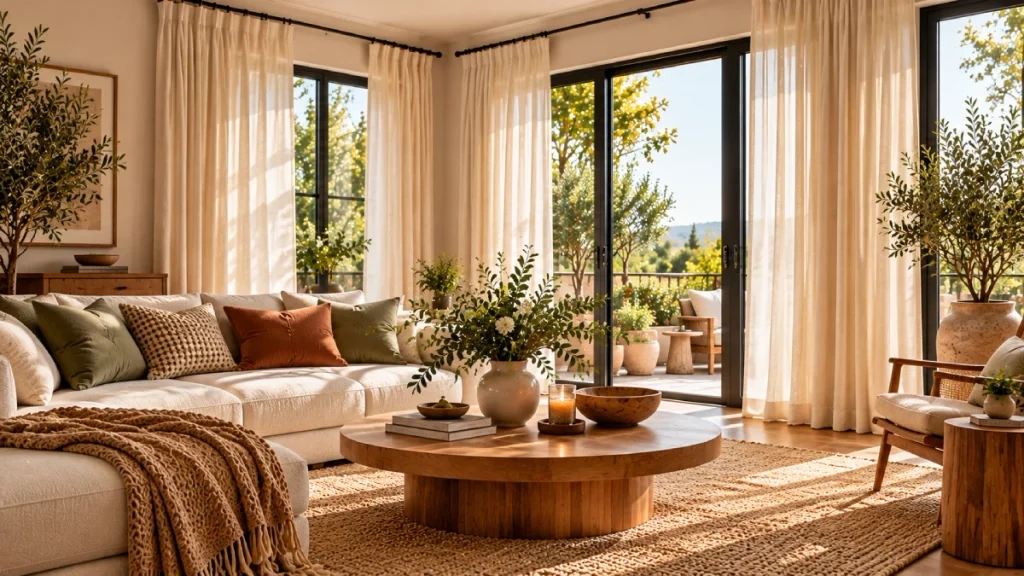
Window treatments are sometimes overlooked during home makeovers.
Yet curtains occupy a significant visual area, especially in rooms with large windows.
For a bright interior, consider ivory, cream, or natural beige curtains.
For a richer look, try forest green, muted blue, or warm brown.
Can Curtains Make a Small Room Look Bigger?
Curtains can make a room appear taller when mounted above the window frame and sized appropriately. Choosing a fabric color that complements the walls can also create a more continuous visual appearance.
Before buying, measure the window width, desired panel fullness, mounting height, and finished length.
Best for: Bedrooms, living rooms, and rental-friendly makeovers.
Consider before starting: Check fabric opacity, cleaning instructions, and mounting requirements. Removable hardware must still support the curtain’s weight safely.
5. Rearrange Furniture Before Buying Anything New
Quick answer: Improving furniture placement can make a room easier to navigate, more comfortable, and visually balanced without purchasing new items.
A furniture layout should support the activities happening in the room.
In a living room, consider whether the seating encourages conversation.
In a bedroom, check whether you can comfortably access both sides of the bed and open drawers.
Avoid positioning large furniture where it blocks natural pathways.
If a room feels crowded, try removing one unnecessary piece before replacing anything.
A simple floor-plan sketch can help you compare arrangements without repeatedly moving heavy furniture.
Best for: Small apartments and multifunctional rooms.
Consider before starting: Preserve safe access to doors, windows, and circulation routes.
6. Introduce Curved Details Without Architectural Changes
Quick answer: Rounded mirrors, curved lamps, circular side tables, and scalloped decorative details can soften a room without changing its structure.
Curved forms are one of the more clearly documented design interests in 2027.
Houzz’s May report recorded increased searches for several curved architectural features, including arched pantry doors and rounded kitchen islands.
But replacing a kitchen island is a major project.
For a more accessible interpretation, introduce one rounded decorative element.
A circular mirror above a rectangular console creates contrast. A curved table lamp can soften a room filled with straight-edged furniture.
Best for: Entryways, bedrooms, and living rooms.
Consider before starting: One or two curved pieces are usually enough to create contrast. Avoid purchasing an entirely new furniture set solely to follow a trend.
7. Create an Accent Wall With Paint or Removable Decor
Quick answer: A painted accent wall, gallery arrangement, or removable wall covering can create a focal point without structural changes.
Accent walls work best when they support the existing furniture and room proportions.
A muted olive wall behind a bed can create a calm focal point.
A warm terracotta wall may suit a dining room with wooden furniture.
If you prefer patterns, consider removable wallpaper in a small area.
Renters should check lease restrictions and test adhesives before applying them.
Best for: Bedrooms, dining areas, and home offices.
Consider before starting: Wall preparation matters. Paint and removable products may not perform well on damaged, damp, or unsuitable surfaces.
8. Improve Storage Without Sacrificing Style
Quick answer: Use storage where clutter naturally accumulates. Drawer organizers, baskets, storage ottomans, and suitable vertical shelving can make everyday spaces easier to maintain.
A beautiful room becomes less enjoyable when it doesn’t function well.
Rather than buying decorative storage randomly, identify what needs organizing.
If blankets collect on the sofa, add a basket nearby.
If shoes crowd the entryway, use a compact shoe cabinet.
If your desk is covered with supplies, introduce drawer dividers or shelves.
The most effective storage system is one that matches your habits.
Best for: Small homes, family spaces, and home offices.
Consider before starting: Tall furniture and shelving may require anchoring. Avoid blocking ventilation or access routes.
9. Refresh Kitchen Cabinets Without Replacing Them
Quick answer: Updating cabinet handles, improving lighting, organizing countertops, and refinishing suitable surfaces can refresh a kitchen without replacing the cabinetry.
Kitchen renovations can involve significant expense and disruption.
If your cabinets are structurally sound, cosmetic changes may be a better starting point.
Try replacing worn handles with a finish that complements the existing fixtures.
You can also introduce coordinated countertop accessories, a washable runner, or more functional drawer organizers.
If repainting cabinets, check the surface material and follow an appropriate preparation process.
Best for: Kitchens with functional cabinetry and outdated finishes.
Consider before starting: Cosmetic updates won’t fix damaged cabinets, moisture problems, or unsafe electrical installations.
10. Use Mirrors to Improve Light and Visual Balance
Quick answer: A mirror can reflect available light and create a sense of depth, particularly in small or narrow rooms.
Mirrors are useful because they combine decoration with visual function.
A large mirror near a window can help distribute daylight.
A rounded mirror above an entryway console can create a focal point without requiring additional furniture.
Choose a size that suits the wall and surrounding objects.
Best for: Entryways, living rooms, and smaller bedrooms.
Consider before starting: Use mounting hardware rated for the mirror and wall material.
11. Make Simple Energy-Efficient Improvements
Quick answer: Compatible LED bulbs, suitable weatherstripping, and better heating and cooling controls are practical starting points for improving household energy efficiency.
Not every worthwhile home improvement is decorative.
Small efficiency upgrades can improve comfort while helping reduce unnecessary energy use.
Start by reviewing lighting.
The U.S. Department of Energy recommends energy-efficient lighting as part of a broader approach to reducing household energy consumption.
Draft reduction can also be useful when doors or windows allow unwanted air leakage.
However, actual savings depend on climate, equipment, installation quality, and usage.
Best for: Homeowners looking for functional improvements.
Consider before starting: Check compatibility and building conditions. Electrical or complex insulation work may require professional assistance.
12. Refresh Your Bedroom With Better Bedding Layers
Quick answer: Coordinated bedding, comfortable pillows, a lightweight throw, and soft lighting can create a more inviting bedroom without replacing furniture.
A bedroom makeover doesn’t have to begin with a new bed frame.
Start with the bedding you use every day.
Choose a comfortable base layer, then add a duvet or blanket that suits the season.
A folded throw at the foot of the bed can introduce color and texture.
For example, pair ivory bedding with caramel and sage accents.
Alternatively, use pale blue bedding with cream accessories for a lighter look.
How Can You Make a Bedroom Look More Luxurious on a Budget?
Use a limited color palette, coordinated bedding, balanced pillow arrangements, and layered lighting. Comfortable fabrics and good proportions usually matter more than adding numerous decorative accessories.
Best for: Primary bedrooms and guest rooms.
Consider before starting: Prioritize comfort, washing requirements, and temperature suitability over appearance alone.
13. Style Your Dining Table for Everyday Living
Quick answer: Coordinated table linens, simple dinnerware, comfortable lighting, and a modest centerpiece can make a dining space feel more intentional.
Dining areas don’t need to be formal to look attractive.
A simple tablecloth or runner can establish the color palette.
Cloth napkins and placemats can add texture while helping protect the table surface.
For a relaxed setting, combine natural fabrics with wooden furniture and simple glassware.
A small vase or low centerpiece adds interest without obstructing conversation.
Best for: Dining rooms and breakfast nooks.
Consider before starting: Choose washable materials suited to frequent meals and household use.
14. Refresh Your Bathroom Without Replacing Tiles
Quick answer: Updating towels, shower curtains, mirrors, lighting, and storage can improve a bathroom’s appearance without changing its plumbing or tilework.
A bathroom refresh should begin with cleanliness and function.
Remove unnecessary items from countertops and organize frequently used products.
Replace worn accessories with coordinated alternatives.
A new shower curtain can introduce a softer color palette, while a suitable mirror may improve the room’s appearance.
Best for: Bathrooms with sound fixtures and finishes.
Consider before starting: Leaks, mold, damaged grout, and ventilation problems require proper attention before decorating.
15. Create a Flexible Home Office
Quick answer: A compact desk, supportive chair, focused lighting, and practical storage can turn an unused corner into a functional workspace.
A dedicated home office isn’t essential for everyone.
A quiet corner of a bedroom or living room may work well when planned carefully.
Choose furniture that fits the available space.
Keep cables organized and everyday supplies accessible.
If the desk shares space with another room, coordinate its finishes with the surrounding furniture.
Best for: Remote workers, students, and small homes.
Consider before starting: Prioritize comfortable working posture and suitable lighting rather than appearance alone.
16. Mix Vintage Pieces With Modern Furniture
Quick answer: Combine a few vintage or handmade objects with contemporary furniture to create a home that feels personal rather than overly coordinated.
Houzz’s October 2026 design report identifies collected, layered interiors as an important direction.
This doesn’t mean every room needs antique furniture.
A vintage mirror, handmade ceramic vase, or secondhand wooden table can introduce character.
Try repeating one material or color to connect old and new pieces.
For example, a vintage wooden side table may complement a modern cream sofa when both sit within a warm neutral palette.
Best for: Living rooms, bedrooms, and entryways.
Consider before starting: Inspect secondhand items for damage, stability, and maintenance requirements.
17. Make Your Balcony or Patio More Comfortable
Quick answer: Compact seating, weather-resistant textiles, suitable greenery, and practical outdoor lighting can transform a small outdoor area without major construction.
Outdoor spaces can support everyday relaxation even when they’re small.
Begin by measuring the available area.
Choose furniture that leaves enough space to move safely.
Add cushions designed for outdoor conditions and plants suited to your local climate.
A small table can make the space more useful for reading or enjoying a drink.
Best for: Balconies, patios, and porches.
Consider before starting: Check drainage, wind exposure, building restrictions, and structural weight limits.
Which Home Improvements Should You Prioritize?
The best project depends on the problem you’re trying to solve.
| Your Main Problem | Recommended Improvement | Why It Helps |
|---|---|---|
| Room feels dark | Layered lighting | Improves usable illumination |
| Space feels crowded | Furniture rearrangement | Creates clearer circulation |
| Home feels outdated | Paint and textile refresh | Changes the visual appearance |
| Bedroom feels uncomfortable | Bedding and lighting | Improves daily comfort |
| Kitchen looks tired | Hardware and organization | Refreshes existing surfaces |
| Small home lacks storage | Multifunctional furniture | Uses available space more effectively |
| Interior feels impersonal | Vintage and handmade accents | Adds individual character |
| Energy use feels inefficient | Lighting and draft assessment | Identifies practical efficiency opportunities |
Life in Vogue’s recommendation: Prioritize improvements in this order: safety and repairs, everyday functionality, lighting and comfort, then decorative styling.
This helps prevent spending money on accessories while more important problems remain unresolved.
How Much Does a Home Makeover Cost Without Renovation?
The cost depends on the room, materials, local labor rates, and how much you already own.
For planning purposes, divide projects into three categories.
Low-Budget Improvements
Rearranging furniture, decluttering, reorganizing shelves, and changing small accessories usually require limited spending.
These are good starting points because they allow you to experiment before committing to larger purchases.
Mid-Budget Improvements
Curtains, rugs, mirrors, lighting, and selected furniture replacements involve greater spending but generally avoid structural work.
Choose items that address a clear need and fit your existing space.
Higher-Budget Cosmetic Improvements
Professional painting, cabinet refinishing, and more extensive decorative wall treatments may require additional materials and labor.
Request local estimates before making decisions.
Important: A project’s cost category is relative. Actual prices vary considerably across the United States and international markets, so universal price estimates can be misleading.
How to Choose Improvements That Will Last
A good home improvement should continue to make sense after the excitement of a new design trend fades.
Ask yourself:
Does this solve a real problem? A better storage system may provide more everyday value than another decorative accessory.
Does it suit my existing home? New colors and materials should work with the furniture and finishes you’re keeping.
Can I maintain it? Consider cleaning, durability, replacement parts, and the amount of care required.
Will it remain useful? Flexible furniture, comfortable lighting, and practical storage can adapt as your needs change.
Houzz’s October 2026 report also highlights long-term livability, noting that 61% of homeowners in its referenced renovation research planned to remain in their homes for at least 11 years after renovating.
That finding relates to surveyed renovating homeowners, not every household, but it reinforces the value of thinking beyond short-lived trends.
Common Home Improvement Mistakes to Avoid
Buying without measuring: Always check dimensions, door clearances, and available walking space.
Following every trend: Choose styles that complement your home instead of replacing everything to match a particular aesthetic.
Ignoring lighting: Evaluate natural and artificial light before selecting colors and materials.
Overdecorating: Leave some surfaces clear so important pieces have room to stand out.
Choosing appearance over practicality: Select materials appropriate for your climate, household, and cleaning needs.
Hiding maintenance problems: Fix leaks, electrical issues, unstable furniture, and damaged surfaces before decorating.
The most successful improvements balance appearance with function, safety, and durability.
Final Thoughts: A Stylish Home Starts With Thoughtful Choices
The best home improvement ideas for 2027 aren’t necessarily the most expensive or dramatic.
They’re the changes that make your home more comfortable, functional, and personal.
Warm colors can soften a room. Better lighting can improve how you use it. Natural textures add depth, while thoughtful storage helps everyday life feel more organized.
You don’t need to complete all 17 ideas at once.
Start with one room, identify what needs attention, and choose a manageable improvement.
A beautiful home isn’t simply a collection of design trends. It’s a space that reflects your personality and supports the way you live.
For more home improvement inspiration, decorating ideas, and practical lifestyle guides, explore Life in Vogue.
Research Sources and Editorial Methodology
This article was developed using publicly available 2026 home design research and practical home improvement guidance.
Primary design research:
- Houzz Research, 2026 U.S. Houzz Emerging Summer Trends Report, May 20, 2026.
- Houzz Research, 2026 U.S. Houzz Fall Design Trends Report, October 2026.
- Houzz, 25 Home Design Trends Defining How We’ll Live in 2026, January 2026
Frequently Asked Questions
What is the biggest home improvement trend for 2027?
The biggest trend is practical, phased renovation. Homeowners are repairing first, upgrading one room at a time and choosing warm, lasting materials over fast-changing styles. Only 8% of renovators now take on the whole home at once.
How much should I budget for a home renovation in 2027?
Plan around $10,000 to $25,000 for a single project, which is what most US homeowners spend. The median renovation spend is $20,000, according to the 2026 Houzz & Home Study. Add a 10% to 20% buffer, because 70% of renovators go over budget.
Which home improvements add the most value?
Exterior replacements add the most resale value. In Zonda’s 2025 Cost vs. Value report, a garage door, a steel entry door and stone veneer each returned more than 200% of their cost. Among larger interior projects, a basement remodel returned 71%.
Is 2027 a good time to renovate?
It depends on the project. Renovation spending is steady, but material prices and borrowing costs remain high. If your project needs new cabinets or a vanity, ordering before the tariff increase planned for January 1, 2027 could reduce your cost.
Are heat pumps still worth it without the federal tax credit?
Often, yes. EnergySage says the financial case remains solid even though the 30% federal credit ended after 2025. State and utility programs still help. Massachusetts, for example, offers rebates of up to $9,000, and Colorado offers a $1,500 tax credit.
What home trends are going out of style in 2027?
All-white and beige-only rooms, single accent walls, overused fluting and matching furniture sets are fading. Designers are replacing them with warmer colour, natural texture and furniture collected over time.
What is the cheapest way to follow 2027 home trends?
Use paint and textiles. An earth-toned wall colour, linen or cotton curtains, new cushion covers and warmer light bulbs follow the 2027 direction for a small fraction of a remodel. One round mirror or curved lamp adds the softer shape.
Should I renovate or move?
Most homeowners choose to renovate. In a 2026 Clever Offers survey, 64% said they would rather renovate than move to a remodelled home. Renovating makes most sense when you like the location and the home’s structure is sound.
How can I make my house look expensive on a budget?
Focus on consistent colors, correctly sized curtains, balanced lighting, uncluttered surfaces, and carefully chosen decorative accents. A cohesive layout can create a more polished appearance without luxury-priced products.